
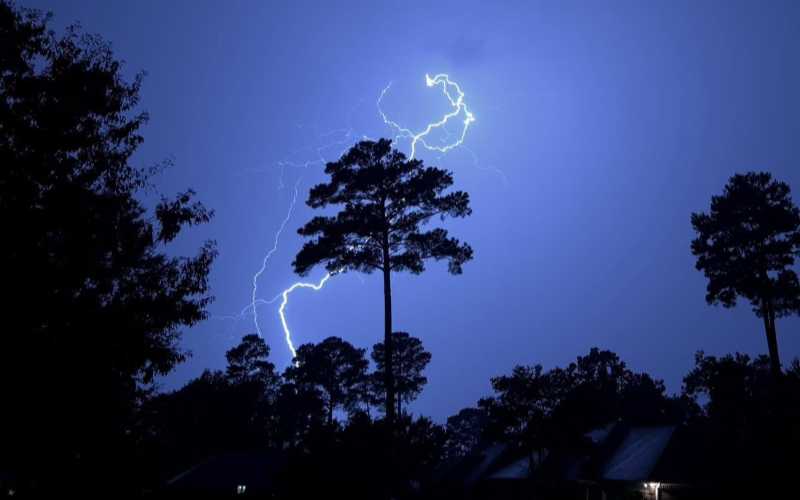
People who live near the Reservoir develop a habit of watching the sky from more than one window. We notice the color over the main water, the way the treetops are moving and whether the water in our cove matches what the weather app is showing. Sometimes a storm announces itself with a hard line of clouds, and sometimes the first warning is a neighbor bringing porch cushions inside. Either way, the calm before bad weather is the useful part. That is when a waterfront house is easiest to prepare.
The simplest routine starts at the shoreline and works back toward the front door. Begin early enough that nobody is rushing on wet boards or trying to move furniture after thunder has started. Look for the light objects that have become invisible through familiarity: an empty planter, a child’s toy, a folded umbrella and the small table that feels heavier than it is. Hard wind has no respect for where those things belong. Bring them under cover or secure them before they become a problem for the next yard or the water.
Walk the Dock While Conditions Are Still Safe
Boat lines deserve more than a quick glance from shore. Check where each line rubs, where it changes direction and where it connects, because wear often hides away from the knot. Look at bumpers, covers, ladders and anything aboard that can collect rainwater or catch wind. Remove loose gear that does not need to remain on the boat. If your safest plan involves moving or hauling the boat, make that decision early and follow current guidance from your marina, manufacturer and local officials.
Electrical equipment and storms do not invite improvisation. Make sure dock lighting and other systems appear secure, but leave repairs and questionable conditions to qualified professionals. Once lightning or strong wind is nearby, keep everyone off the dock. A waterfront view makes weather interesting to watch, especially when the far shore disappears behind rain, but the safest seat is inside and away from windows. Children and pets need that rule before the first thunder, not while everybody is trying to count seconds between flashes.
On the way back to the house, coil hoses and secure trash or recycling containers. Clear the obvious debris from drains only while conditions are safe, and make sure gates and storage boxes latch properly. Trim nothing and climb nowhere because a storm is approaching; last-minute ladder work creates more risk than one loose branch. If a tree looks dangerous, give it distance and call someone equipped to assess it. Preparation should make the afternoon calmer, not turn it into an emergency of our own making.
Prepare for an Ordinary Power Outage
Inside, charge phones, portable lights and necessary medical equipment. Put shoes, work gloves and a basic first-aid kit where they can be reached in the dark. Know which flashlights actually work instead of trusting the drawer that contains twelve batteries and none of the correct size. If power fails, keep refrigerator and freezer doors closed and follow current utility and emergency guidance. Most outages are mainly inconvenient, but a little preparation keeps inconvenience from becoming confusion.
Then check on the people closest to you. A quick text may reveal that the neighbors are out of town and left two light chairs beside the water, or that an older resident could use help moving one planter. Share official weather information rather than a screenshot with no date or source. Reservoir neighborhoods stretch across different coves and jurisdictions, so say exactly what area an alert covers. “Somebody said” is not useful when the sky is already changing.
The Morning After Begins With Patience
When the storm passes, resist the urge to walk straight to the dock in darkness. Use daylight whenever possible and look from a safe place first. Wet leaves can hide lifted boards, nails and sharp debris, while damaged electrical equipment and downed lines deserve a wide boundary. Photograph meaningful damage before cleanup if insurance, a marina or a contractor may need to see it. Remove only what you can handle safely and leave structural work to people with the right equipment.
Storm preparation at the Reservoir is never only about one property. Wind pushes a chair across a lot, water collects debris against somebody else’s dock, and a power outage rarely stops at a fence. We each have our own list, but the routine works best when it includes a look next door. Bring in what can blow, secure what can move, and make sure the people around you are ready. That is not alarm; it is simply how neighbors live beside open water.