
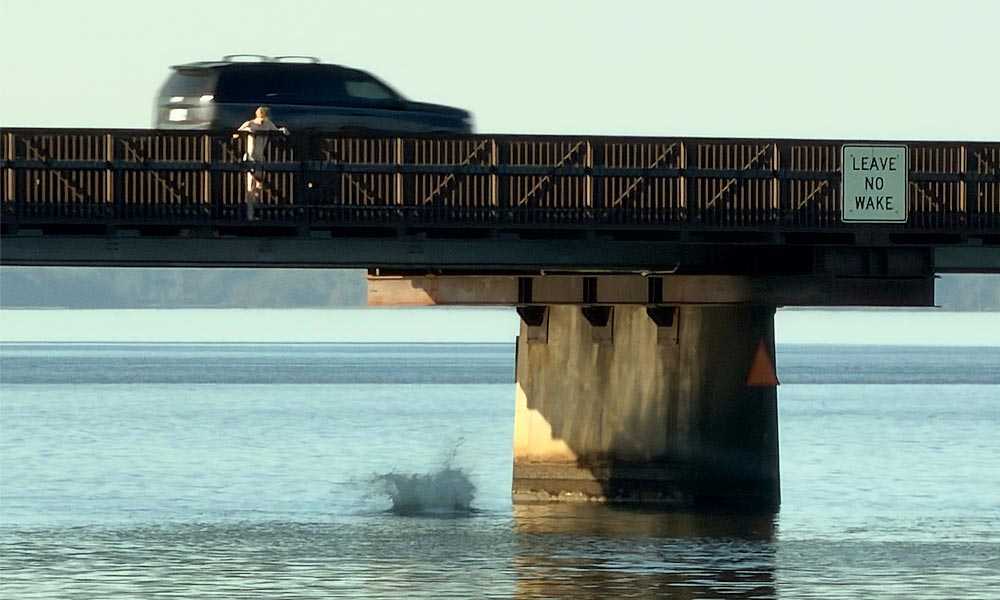
Watching two people jump from the causeway bridge into the Reservoir this afternoon was a reminder of how easily a little recreation can become an emergency. From above, the water may look deep enough and the jump may not seem particularly high. Neither tells you what is beneath the surface or what will happen when you hit it.
One of the biggest dangers is what you cannot see. Open water can conceal logs, rocks, submerged debris and sudden changes in depth. The U.S. Army Corps of Engineers warns that bridges and other jumping spots can have shallow areas or underwater shelves beneath them. A spot where someone jumped before is not a guarantee of safe conditions today, and seeing boats pass through an area does not establish that every part of it is deep or clear enough for a person to enter safely.
Even when the water is deep, the impact itself can cause serious injuries. In its guidance about jumping from cliffs and bridges, the Corps warns that entering feetfirst can still result in broken bones, spinal injuries or a concussion. Someone knocked unconscious or badly injured on impact may be unable to keep themselves above water. Being a strong swimmer offers little protection if the landing leaves you unable to swim.
Getting back to shore is another part of the risk. Open-water swimming is different from swimming in a pool, and waves, currents and fatigue can make the return more difficult than expected. A warm afternoon also does not necessarily mean warm water. When water is cold, sudden immersion can trigger involuntary gasping and rapid breathing, creating an immediate drowning danger. These are general open-water hazards, even when the surface looks inviting.
Boat traffic adds another reason to stay away from bridge openings as swimming spots. Wherever boats pass, a person in the water risks a collision, and jumping into that space introduces someone a boater may have little opportunity to avoid. Water-safety guidance recommends staying out of boat traffic areas. A bridge should not be treated as a diving platform simply because there is water beneath it.
For anyone who wants to swim, choose an area where swimming is permitted, preferably with lifeguards, go with a buddy and use a properly fitted life jacket appropriate for the activity. A life jacket does not make bridge jumping safe or prevent injuries from impact. Parents should talk with children and teenagers about these risks before a dare or someone else’s example becomes an invitation to jump.
If you see someone struggling in the water, call 911 and give the bridge location and the person’s last visible position as clearly as possible. From a secure position, throw a flotation device or extend a reaching object if you can do so safely. The American Red Cross teaches “reach or throw, don’t go,” because an untrained person entering the water can become a second person needing rescue. Keep watching the person and help direct responders to them.