
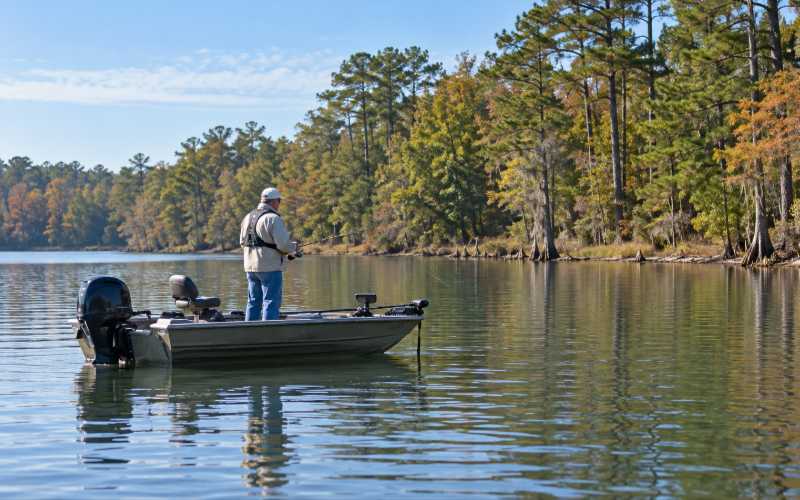
As fall arrives and weather patterns adjust, water levels at Ross Barnett Reservoir can drop lower than some residents expect. For those planning a weekend of fishing, boating, or letting children explore the shoreline, these fluctuations affect where and how we enjoy the reservoir during the season.
One of the first changes boaters notice is the impact on ramps and access points. When the lake sits below typical levels, some ramps—especially those with a shallow incline—may not reach deep enough water to float a boat off the trailer. The reservoir is managed with year-round recreation in mind, but below-average water can temporarily restrict or close certain ramps. The Pearl River Valley Water Supply District shares status updates for visitors. Still, checking ramp conditions in person before trailering a boat can help avoid disappointment. Even when ramps remain open, lower water sometimes exposes more rocks or mud near the launch, requiring extra care during launching and retrieval.
Fishing patterns also shift when water drops. Fish may move to deeper channels or cluster around underwater structure that remains submerged. Anglers could find favorite coves or creek mouths unexpectedly shallow or cut off from the main reservoir. Some take advantage of these water levels to spot underwater features usually hidden, making mental notes of stumps or ledges for future outings. With fish more concentrated in deeper spots, the action can change from week to week. State agencies provide general advice about seasonal fish movement, but local observations—often shared in online forums or at the dock—tend to fill in details as conditions change. The Mississippi Department of Wildlife, Fisheries, and Parks posts updates on fishing conditions at the reservoir when available.
Families who enjoy picnicking or walking along the shoreline may find broader areas of exposed mud or sand during low water. This sometimes means more space to explore but can also bring a less appealing landscape and trickier footing, especially for children or older adults. Where docks or piers typically sit just above the water, the gap between the boards and the surface may widen, making access more difficult or, in some cases, unsafe. Checking with local parks or browsing recent visitor photos online can help families plan safe and enjoyable outings.
Lower water can affect recreation in other ways. Kayakers and paddleboarders might encounter new obstacles or shifting currents, especially in backwater areas. Organizers of fishing tournaments or group gatherings sometimes adjust plans or locations if ramps or water access change. For casual visitors, keeping plans flexible and monitoring local agency updates or recreation websites can help ensure a smooth trip.
Seasonal drops in water level at the reservoir usually don’t last the entire year, but they do influence how we use the lake in the moment. With a little planning—whether adjusting fishing techniques, checking ramps before heading out, or swapping a lakeside picnic for a trail walk—autumn at the reservoir can still offer plenty to enjoy, even if the shoreline sits a little farther out than usual.