
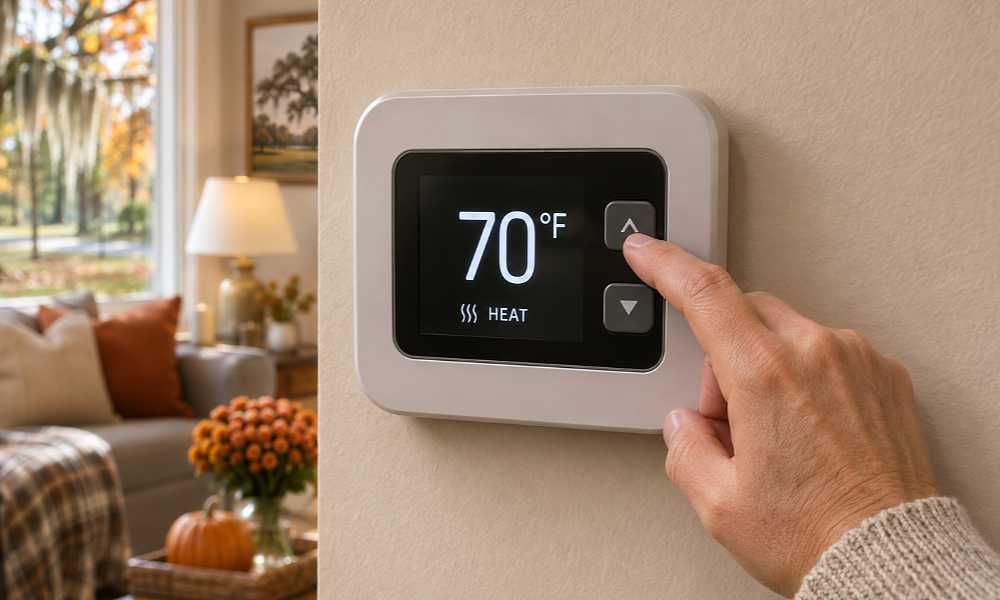
Cooler mornings around the Reservoir bring a welcome break from summer air conditioning, but switching on the heat can start another round of higher utility bills. Before turning up the thermostat, a few adjustments around the house can help keep your family comfortable without using more energy than necessary.
For residents in Brandon, Ridgeland, and neighborhoods around the Ross Barnett Reservoir, the best starting point is often something simple: check the thermostat, find the drafts, and look at the everyday habits that quietly add to the electric bill.
Start with the thermostat
The U.S. Department of Energy suggests starting around 68 to 70 degrees while you are home during the cooler months, then adjusting for your household’s comfort and needs. If you normally keep the house warmer, try lowering the setting a degree at a time. A sweatshirt or an extra blanket may make the adjustment easier without anyone spending the evening shivering.
For homes with conventional furnaces, lowering the temperature while everyone is away or asleep can reduce heating costs. Heat pumps need a different approach: large temperature changes can bring on electric backup heat and erase the savings. If your home uses a heat pump, follow the system’s guidance and use a compatible thermostat before setting an aggressive daily schedule.
Find the places where warm air escapes
A draft beside the couch can tempt you to turn up the heat for the entire house. Instead, check nearby windows and exterior doors for gaps or worn seals. Weatherstripping around moving parts, caulk around appropriate stationary gaps, and a properly fitted door sweep can help reduce unwanted airflow. If you rent, report damaged seals or persistent drafts to your landlord before making permanent changes.
For a home that remains uncomfortable after those small fixes, an energy assessment can help identify larger problems, including attic air leaks or insufficient insulation. Find out where the house is losing energy before spending money on replacement windows or other major upgrades.
Let the sunshine help
Open curtains on sunny, south-facing windows during the day to let sunlight warm the room, then close them at night to help reduce the chill from the glass. This is an easy habit to build into your morning and evening routine, especially in rooms where your family spends the most time.
Give your heating system some attention
Check the air filter and clean or replace it according to the system manufacturer’s recommendations. A dirty filter can restrict airflow and make the system work harder. If you cannot remember when you last checked yours, put it on this weekend’s list.
Homes with fuel-burning heating equipment also need regular safety attention. The Consumer Product Safety Commission recommends an annual professional inspection of fuel-burning heating systems, fireplaces, chimneys, and related vents. Test smoke and carbon monoxide alarms as part of your cooler-weather preparations.
Do the math before relying on a space heater
A portable electric heater adds to your electricity use whenever it runs. For example, a 1,500-watt heater operating at full power for eight hours uses 12 kilowatt-hours. At an illustrative electricity rate of 15 cents per kilowatt-hour, that is $1.80 a day, or about $54 over 30 days. Your actual cost depends on your rate and how often the heater cycles on.
If the central heat stays at the same setting while the space heater runs, you are adding another energy expense. Use portable heaters thoughtfully, plug them directly into a wall outlet, keep them at least three feet from curtains, bedding, and furniture, and turn them off before sleeping.
Look beyond the heating bill
A few everyday changes can reduce energy use throughout the house:
- Wash clothes in cold water when care instructions allow. Heating wash water adds to the energy needed for laundry.
- Run full loads. Make the most of each dishwasher and washing-machine cycle without overloading either appliance.
- Avoid overdrying clothes. Use the dryer’s moisture-sensing setting if available, and clean the lint filter before every load.
- Use the dishwasher’s air-dry option. If your model offers it, this can reduce energy used for drying.
- Replace frequently used incandescent bulbs with LEDs. Start with lights that stay on for several hours each evening.
Check your usage, not just the amount due
When the next bill arrives, look at the electricity used in kilowatt-hours as well as the total charge. Check the number of days in the billing period, and remember that colder weather, rate changes, and fees can affect comparisons. If your utility provides daily usage information, use it to see whether changes around the house are making a difference.
You can also ask your provider about energy assessments, efficiency programs, and payment options. Budget billing may make monthly payments more predictable, but it does not reduce the amount of energy you use or the overall cost.
Getting ready for cooler weather does not have to mean an expensive home project. Start with a comfortable thermostat setting, a filter check, and the draft you have been meaning to fix. Those are manageable steps to take now, before the heat becomes part of the daily routine.