
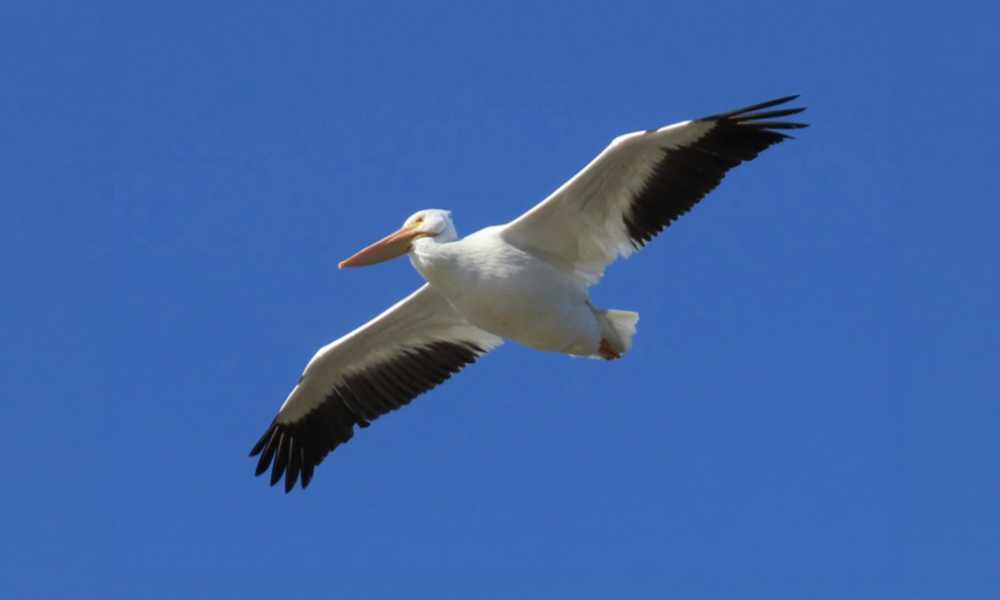
If you’ve spent any time scanning the waters of the Ross Barnett Reservoir recently, you might have noticed a striking absence. Every autumn, like clockwork, nature lovers across Central Mississippi look forward to the arrival of the American White Pelican (Pelecanus erythrorhynchos). Flocks of these magnificent birds – with their nine-foot wingspans and snowy plumage – typically transform the lake into a bustling stopover by mid-to-late October.
This year, however, the lake remains quiet. While locals might wonder if water conditions or feeding spots have shifted, the real culprit isn’t at the “Rez” at all. It’s hanging out hundreds of miles up north: unseasonably warm autumn weather.
The Science of the “Stalled” Migration
Unlike songbirds that navigate largely by day length, waterfowl and large soaring birds like white pelicans rely heavily on temperature triggers and wind patterns to prompt their southward journeys.
- Abundant Food Up North: White pelicans spend their summer breeding months in the Northern Great Plains and central Canada. As long as northern lakes remain ice-free and fish stay active near the surface, pelicans have little incentive to expend the energy needed for a 1,000-mile flight down the Mississippi Flyway.
- Missing Tailwinds: The major push that brings thousands of pelicans into Mississippi usually coincides with the season’s first strong cold fronts. Northerly winds behind these cold fronts act like an express elevator, allowing pelicans to ride thermal updrafts and conserve energy while soaring long distances. Mild, stagnant weather systems stall that conveyor belt.
What It Means for Local Birders
If you’ve been checking your usual spots along the spillway or Northshore Causeway with empty binoculars, don’t worry—the pelicans haven’t abandoned the reservoir.
Migration isn’t canceled; it’s simply on pause. As soon as a significant arctic air mass moves across the Midwest and down through the South, expected to arrive as November rolls on, the migratory floodgates will open.
Tips for Spotting Them When They Arrive
Keep your eyes on the weather forecast. Within 24 to 48 hours following the next strong cold front, head out to these prime viewing spots around the Ross Barnett Reservoir:
- Pelahatchie Bay: Excellent for viewing floating flocks resting in calm waters.
- The Spillway: A favorite spot to watch pelicans cooperatively herd fish in the moving water.
- Northshore Causeway: Ideal for catching them soaring in formation against a clear autumn sky.
Nature operates on its own clock, and this year, autumn is taking its time. Keep your optics ready—the white giant fleet is on its way!