
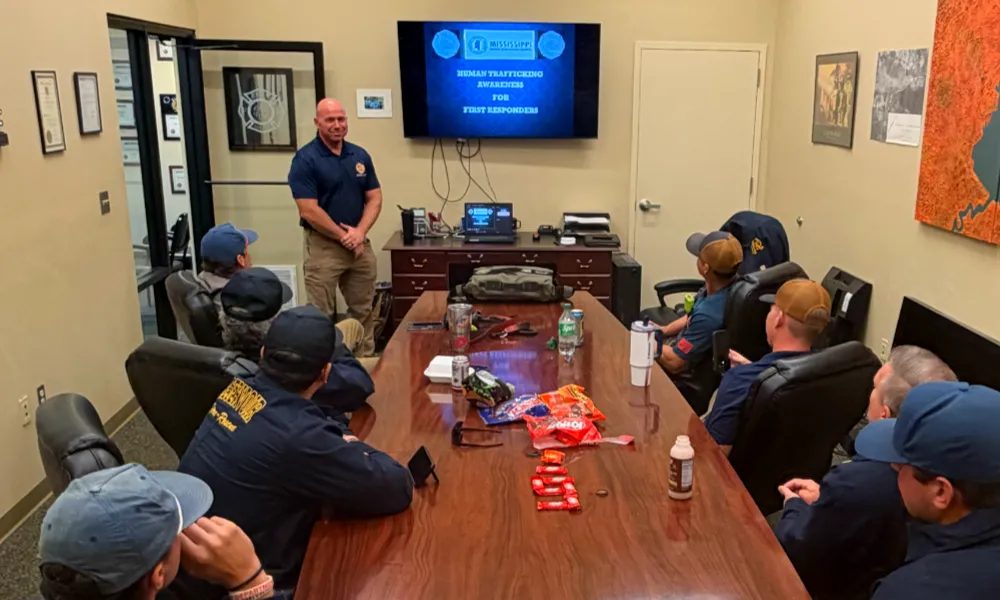
Reservoir firefighters received training on Monday, Nov. 2, to recognize signs of human trafficking, a situation they could encounter while responding to calls in the community. Jason Watkins, the Reservoir Fire Department’s Chief of Training, said this is the first time the department has hosted training on the subject. The goal is to help crews recognize circumstances that might otherwise go unnoticed.
“With us being first responders, a lot of times we’re first on scene,” Watkins said. He explained that the training helps firefighters stay current on problems they may encounter and gives them a better understanding of what to look for. Recognizing those signs, he said, can put responders in a position to help stop exploitation.
Asked whether human trafficking could happen in the Reservoir area, Watkins answered, “Can it happen here? A hundred percent.” He emphasized preparation, saying he wants firefighters ready if they encounter a trafficking situation. His comments focused on equipping crews for that possibility, without identifying a specific local incident that prompted the class.
Mississippi figures show why the subject deserves attention. The National Human Trafficking Hotline identified 174 trafficking cases involving 271 victims in Mississippi in 2025. Reported cases included 115 involving sex trafficking, 22 involving labor trafficking and 17 involving both, according to the hotline’s Mississippi statistics.
Those figures describe situations reported to the hotline. A hotline “case” does not necessarily mean a criminal investigation, and the organization cautions that its statistics do not measure how widespread trafficking is in a particular community or state. The numbers reflect information shared by people who knew about and chose to contact the hotline.
Separately, the Mississippi Bureau of Investigation’s Human Trafficking/Special Victims Unit reported 60 trafficking victim recoveries during 2025. Those included 55 involving sex trafficking, three involving labor trafficking and two involving both. That count covers cases worked by the unit and does not represent all trafficking activity in Mississippi, according to the Mississippi Department of Public Safety.
The Mississippi State Fire Academy conducted the human trafficking class. Watkins said that, as he recalled, the subject is being incorporated into new-recruit instruction so firefighters learn about it before returning to their departments to do the job. The state’s broader training effort includes a two-hour human trafficking awareness course developed by the academy for firefighters statewide, according to the Department of Public Safety’s training initiatives.
Recognizing possible victims can be difficult because they may not identify themselves or ask for help. The Mississippi State Department of Health says fear, trauma and manipulation can keep people from disclosing what is happening. Its guidance lists possible warning signs, including physical abuse, unusual fearfulness, lack of control over personal money or identification, and inadequate food, sleep, or care.
Reservoir Fire Chief Josh Swales added, “This class has some eye-opening, valuable information in it. As First Responders we encounter a lot of different emergencies and situations routinely. As firefighters, we have lots of contact with the public, and this class provides us with more information and things to look for to keep our Community Safe!”
Anyone seeking help or wishing to report a possible trafficking situation can call the National Human Trafficking Hotline at 1-888-373-7888 or text 233733. The service provides confidential support and referrals around the clock. Call 911 for an immediate emergency.