
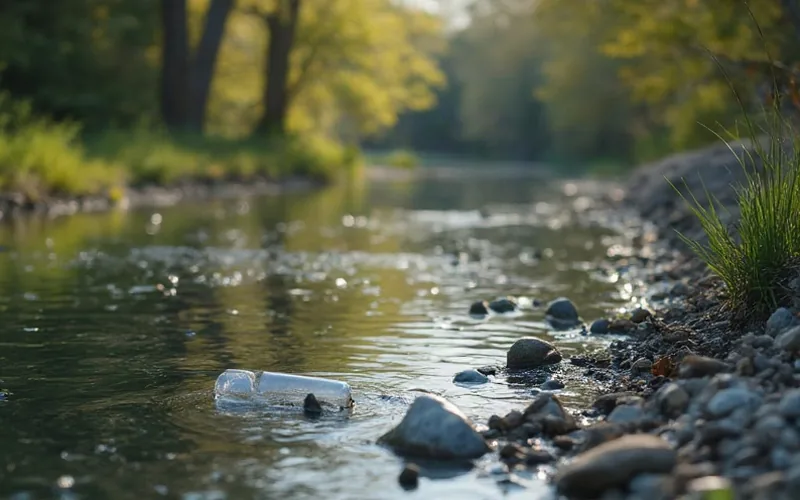
Large shoreline cleanups have their place. They bring volunteers together, move bulky debris and remind the whole community that the Reservoir does not clean itself. Most litter, though, arrives one cup, wrapper and length of fishing line at a time. That means some of the most useful cleanup work can happen the same way. One person carrying one grocery bag on the walk they were already going to take is enough to improve a small stretch of home.
The habit is easy if the supplies are waiting by the door. Keep a few sturdy bags, work gloves and a simple litter grabber if bending is difficult. Choose the same route you use after supper or while walking the dog. Pick up only what is safe to handle, and leave sharp, hazardous or unidentified material alone. A precise report to the appropriate local authority is better than turning an unknown container into a personal science experiment.
Catch It Before the Next Rain Does
A bottle beside the curb does not necessarily stay beside the curb. Wind pushes it toward a ditch, and the next hard rain may carry it through a drain or across the grass toward the shoreline. Cups and foam break into pieces that become harder to collect with every mowing and storm. Removing one item early is much simpler than chasing fragments later. Around the Reservoir, the path between street litter and water is often shorter than it looks on a dry afternoon.
Pay special attention near drains, parking edges, public access areas and places where wind naturally piles leaves. Those same pockets collect lightweight trash. Do not stand in traffic or enter private property to reach something, and keep children beside you rather than sending them ahead. A cleanup route should be safe enough to repeat. If a location needs traffic control or equipment, it needs an organized effort rather than a grocery bag.
Fishing Line Is a Different Kind of Litter
Discarded line tangles around birds, turtles, equipment and hands. Approach it carefully because a hook may still be attached or hidden in grass. Use a tool if needed, wind the line into a contained bundle and take it to a proper disposal or monofilament-recycling location where one is available. Never pull hard on line disappearing into water or vegetation. What is caught on the other end may be sharp, heavy or alive.
Anglers can prevent most of the problem by carrying a small container for clipped line and worn tackle. Boat owners should inspect decks and storage areas before loose pieces blow away. Parents can teach children that “pack it out” includes the tiny tag end, not only the drink bottle. The amount looks insignificant in one hand, but a season of small pieces is exactly how a shoreline acquires a large problem.
Keep the cleanup neighborly. Do not photograph somebody else’s trash pile for social media unless the image serves a legitimate report and avoids identifying private people. Pick up what you can, invite a neighbor if they want to walk and dispose of the bag properly. If the same public spot repeatedly collects litter, record the exact location and pattern for the responsible authority. Complaints without a location tend to travel farther than the trash and accomplish less.
Small Enough to Do Again
A one-bag cleanup works because it does not require a committee, a shirt or a free Saturday morning. It fits after supper, before school pickup or into the twenty minutes when you are waiting for someone to get home. Stop when the bag is full or the light is fading. Consistency matters more than turning one walk into an endurance event. A cared-for stretch of road often encourages the next person to treat it with more care.
The Reservoir will never remain perfectly clean, especially after weather or a busy weekend, but it can look like people are paying attention. That visible attention is part of being local. We know which ditch drains toward which cove and where the wind deposits everything after a front. Carry a bag, handle what is safe and leave one familiar stretch a little better than you found it. That is enough work for one evening.