
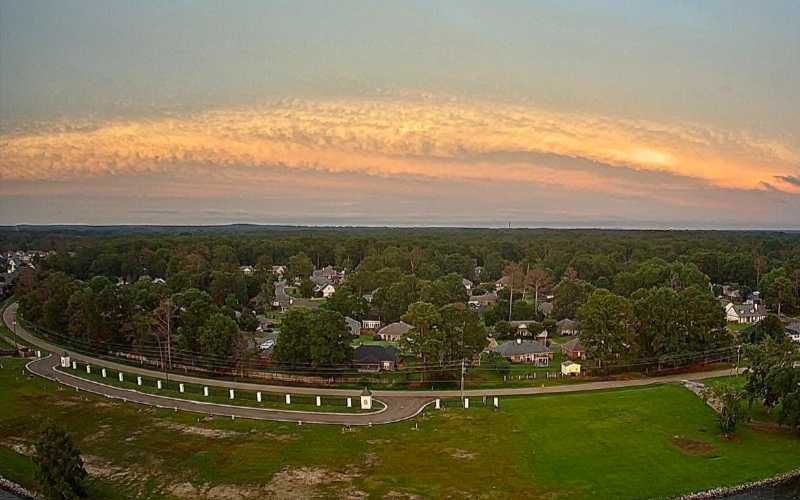
Living near the Reservoir can create a strange pressure to use it in the biggest possible way. A free Saturday begins to sound like fuel, coolers, a trailer and enough gear to support a small expedition. By the time everything is loaded, half the family is tired and the morning has become a project. Some weekends improve the moment we leave the boat where it is. The shoreline has plenty to offer at walking speed.
Start early, before heat and traffic make every choice more complicated. Pick a public trail, park or familiar walking route and set a modest turnaround point. The paved Chisha Foka Trail near the Reservoir Overlook is one option, but the better choice may be the place ten minutes from your house that you keep passing. The goal is not to cover mileage or prove how well we know the area. It is to notice a morning that would otherwise disappear into errands.
Pack for Comfort, Not an Expedition
Water, a hat, a small towel and something simple to eat will cover most half-day plans. Add binoculars if birds interest you or a notebook if sitting still feels easier with a reason. Bring insect and sun protection appropriate for the season, and wear shoes that suit the actual route rather than the picture you expect to take. Keep valuables out of sight in the vehicle. A small outing should not require leaving the contents of the house in the parking lot.
Before starting, read posted hours and rules. Public access does not mean every path, dock or shoreline is open for every use. The Reservoir is bordered by district, federal, municipal and private property that may look connected from a distance. Stay in designated areas and give private homes the same space you expect at your own. A peaceful walk is less peaceful when it ends with an avoidable property discussion.
Choose One Place to Slow Down
After walking, find a legal shaded place where you can see or hear the water. Do not immediately fill the stop with music or a phone call. Watch boat traffic from shore and notice how different it feels when you are not responsible for the boat. Wind in the trees, distant motors and birds working the edge of a cove create enough sound. The Reservoir does not require a soundtrack.
If children are along, give them one small job: spot three kinds of leaves, count boats of a certain color or find a place where the wind changes the surface. Keep them closely supervised near water and roads. An outing does not become educational because an adult delivers a lecture. Curiosity works better when children have time to look. Bring the question home if nobody knows the answer.
A half-day plan leaves room for weather to have an opinion. If clouds build or the heat arrives early, turn back. Shortening the route does not erase the part you enjoyed. Check official conditions when weather may affect the outing, and stay off exposed trails or shorelines when lightning is nearby. The advantage of a simple plan is that leaving can be simple too.
Come Home Before the Day Becomes Work
End while everyone still feels good. Head home before the parking area, road or temperature turns the return into a negotiation. Rinse the dust off, make lunch and enjoy the rare feeling of having gone somewhere without spending all day preparing and recovering. The afternoon remains open for a nap, a porch visit or the hardware-store trip that was going to happen anyway. Nothing about the morning needs to be maximized.
A boat-free day is not a substitute for the Reservoir experience. It is another version of it, one that pays attention to trails, shade, public views and the communities around the water. Sometimes the best equipment is a comfortable pair of shoes and the willingness to stop after three good hours. We live close enough to come back. That may be the greatest local luxury of all.