
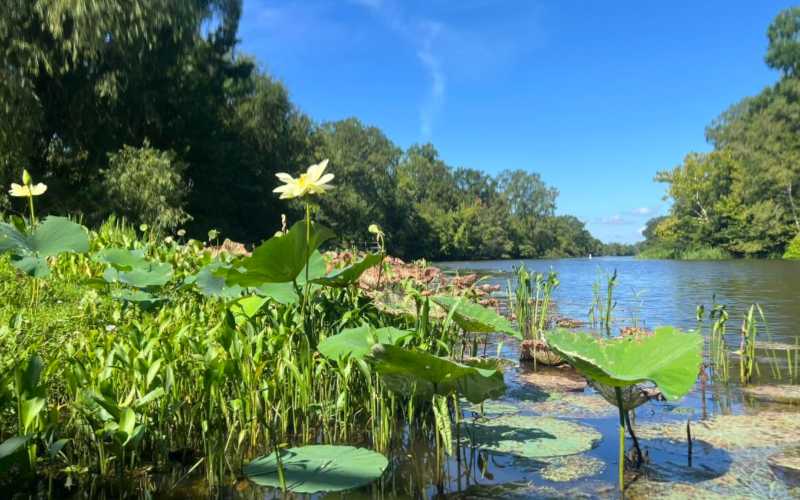
Pelahatchie Bay is often mentioned in the language of fishing. Somebody found a pattern there, the vegetation is doing something useful or biologists included the bay in a survey. Those are important parts of the place, but they are not the whole description. From the neighborhood side, Pelahatchie Bay rewards a longer look. Its scale and shape create a different daily relationship with the Reservoir than the wide main lake does.
The bay can feel more enclosed, with shorelines folding into coves and trees breaking one large view into several smaller ones. Wind may roughen one pocket while the next holds still. Morning fog can erase a familiar bank, then lift quickly enough to reveal it before breakfast is finished. Late light reaches around a curve and finds only part of the water. The view is never simply “the lake.”
Coves Make Their Own Small Weather
People who live nearby learn that conditions in one protected section may not represent the water beyond it. A calm dock does not guarantee a calm route toward the main lake. Wind direction, rain and changing light matter, especially for small craft. Check current forecasts and look beyond the immediate shoreline before leaving. Familiar water still deserves a full plan.
The same sheltered shape that changes wind also changes sound. Voices, dogs and music may carry across a narrow cove more clearly than residents expect. A work light pointed toward the water can land on several homes at once. Good neighbors keep speakers close, task lights directed downward and early or late dock activity reasonable. The bay makes proximity visible even when the road between homes is much longer.
Vegetation Is Part of the Landscape
Aquatic vegetation, wooded edges and shallow cover help define the bay visually and ecologically. Anglers read those features for habitat, while homeowners may see them as part of the seasonal view. Boaters need to treat them as real navigation conditions rather than scenery. Follow current charts, posted notices and safe operating practices, and never assume a clear line last month remains clear today. Water and plants keep their own calendar.
The changing edge also attracts wildlife. Herons and egrets work the shallows, turtles use quiet margins and raptors may pass overhead. Observe from a respectful distance and avoid approaching nests or feeding animals. Keep pets controlled near the shoreline. The best wildlife encounter is usually the one that continues normally after we notice it.
On land, the bay appears in glimpses between homes, trees and roads. Those glimpses can tempt people to stop where they should not or treat private property like an overlook. Use designated public areas, legal parking and established access. Do not block a gate or pull into a driveway for a photograph. A beautiful view does not rewrite ownership.
Local Knowledge Begins With Repetition
The longer look comes from seeing the same cove under different conditions. Residents notice where wind first marks the surface, where rainwater enters and which birds return to a particular edge. Anglers remember a depth or temperature, while walkers recognize how the light shifts through the year. Those observations build a map no single visit can provide. They also teach humility, because the next storm will revise part of it.
Pelahatchie Bay is not a smaller copy of the main Reservoir. It has its own pace, tighter views and transitions that reveal themselves gradually. The bay becomes more interesting when we stop treating it as a label in a report and start watching how it lives. Around here, paying attention is one of the ways a place becomes a neighborhood.