
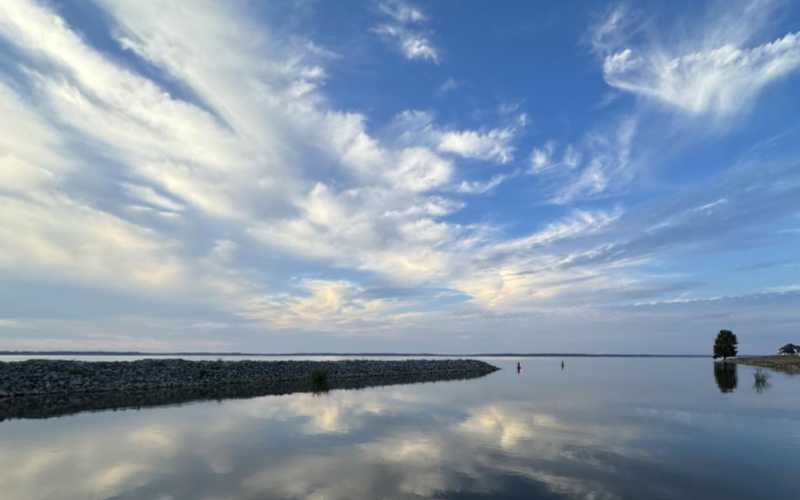
Some Reservoir Saturdays arrive with a forecast that changes every time we check it. Sun is promised at breakfast, a dark line appears by lunch and then blue sky returns while everybody is still standing in the kitchen arguing about whether to leave. One person reads the hourly forecast, another studies radar and somebody points out the window as if personal observation will settle the atmosphere. By noon, the weather has not ruined the day. The discussion has.
The local answer is not to outguess every cloud. Make the plan smaller. Choose something that can be enjoyable in an hour or two and can end quickly if conditions change. A walk, bank-fishing stop, simple park lunch or visit to the overlook works better than an elaborate setup spread across three vehicles. Flexibility begins before the first cooler is packed.
Check the Source, Then Look Outside
Start with current information from the National Weather Service office in Jackson or here on our weather page. Read the forecast, watches and warnings, including the time and counties involved. Radar is useful for seeing movement, but it does not replace the official message or explain every hazard by itself. Continue monitoring conditions after leaving home. A morning forecast is not a promise that lasts until supper.
Then consider the exact place you plan to use. Open water, a wooded trail and a covered porch respond differently to the same weather. Conditions at home may not match the main lake, and a protected cove can hide what wind is doing beyond it. The plan should account for the route out as well as the activity. If safe shelter is not close, leave earlier.
Pack the Exit Before the Outing
Keep keys, shoes, lights and rain gear where they can be reached without unpacking the vehicle. Do not scatter chairs, tackle and toys across a large area if the sky is uncertain. On a boat, secure loose equipment and follow established boating-safety practices; distant thunder is a reason to act, not background sound. Know who is watching children and pets. A quick departure succeeds when everybody understood it before the first raindrop.
Food should survive a change of plan. Use sealed containers, keep cold items properly chilled and pack a meal that can return home without becoming a loss. One small cooler is easier to manage than a table full of dishes. If the outing ends early, eat on the porch when conditions are safe. Sandwiches do not care which view they receive.
Give the day an indoor or covered second choice, but do not create a schedule so detailed that changing it feels like defeat. A local errand, unhurried lunch or home project can fill the middle hours while weather passes. Keep the boat ready for later without assuming later must happen. Sometimes the storm clears the air and leaves a beautiful evening. Sometimes it does not.
A Short Good Hour Still Counts
Thirty quiet minutes by the water before rain is not a failed outing. Neither is turning around after one loop because the wind picked up. We live close enough to return on another day, which means we do not have to squeeze value from dangerous or miserable conditions. Visitors may feel pressure to salvage a weekend; residents can afford patience. The Reservoir will remain after the clouds move.
If the weather clears safely, go back out with a fresh look at the forecast and enough daylight for the plan. If it stays unsettled, let the chairs remain folded. Coffee on a covered porch while rain crosses the cove is still part of living here. A flexible weekend does not lower expectations. It keeps a forecast from owning every hour before the weather has even arrived.