
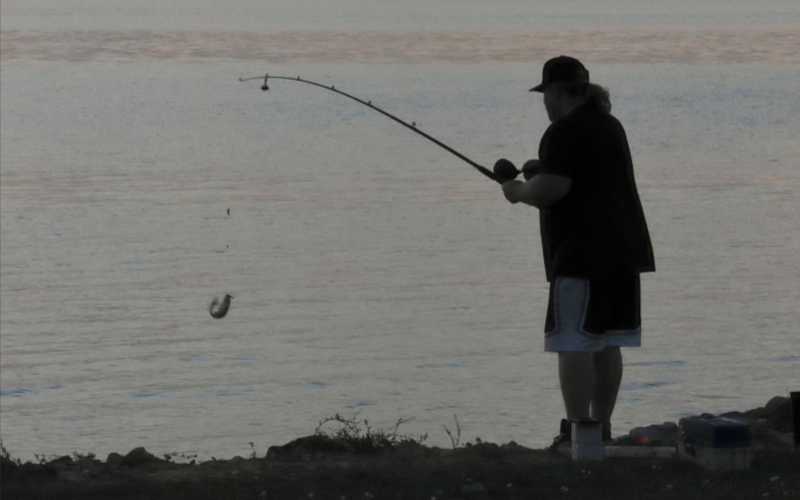
Bank fishing at the Reservoir is easiest to enjoy before we turn it into a major operation. One rod becomes four, the small tackle bag becomes a rolling box and suddenly a quiet morning requires two trips from the truck. Most of the time, the first hour needs less. A rod you know, a few useful choices and a safe patch of public bank can provide all the reason to go. If the fish cooperate, that is a bonus.
Choose the location before daylight rather than improvising at the first open gate. Make sure fishing is allowed, note posted hours and understand where public property ends. Check the MDWFP Ross Barnett page for current licenses, regulations and the latest fishing report. Some areas, including the spillway, have special rules that deserve a careful read. “I have always done it this way” is not a regulation.
Carry Only What You Will Use
Bring drinking water, pliers, a small amount of tackle and a container for clipped line and trash. Wear shoes suited to wet grass, mud or riprap, not the shoes that happened to be by the door. A light, insect protection and a basic first-aid item or two may belong in the bag depending on the location and hour. Keep both hands as free as possible while walking. The bank becomes less friendly when roots and rocks are hidden before sunrise.
If children come, reduce the fishing plan and increase the supervision plan. Keep them close and away from steep or unstable edges, and use properly fitted personal flotation devices when appropriate. Explain where hooks go when they are not in the water. One adult should know clearly who is watching, especially in a group. A quiet bite can make everybody stare in the same direction.
Give the Spot Enough Time to Speak
Once settled, watch before casting across every available angle. Notice surface activity, shade, current, vegetation and where deeper water may meet the bank. Listen for fish moving near cover. A missed bite is information, and so is twenty minutes without one. Moving every five minutes can turn a calm morning into a tour of parking lots.
Use the official report as a starting point, not a guarantee. A habitat clue may help more than the exact bait named that week. Adjust depth and speed before changing everything at once. If another angler is nearby, leave enough room for both of you to work without crossing lines. The best local spot is not improved by pretending nobody else knows it exists.
Bank fishing gives us a close view of how much passes along the edge. Birds work the shallows, turtles appear and wind gathers leaves against cover. Observe without crowding or feeding wildlife. Keep noise reasonable, particularly near homes. The shoreline may be public while the bedroom across from it is very much not.
Leave With Less Than You Found
Pack out bait containers, bottles, line and every piece of tackle packaging. Tangled line requires special care because a hook may still be attached or hidden. Use tools, contain it securely or leave hazardous debris for someone equipped to handle it. Never release unused live bait or move organisms into the Reservoir. Check current guidance for proper disposal.
A fish makes the first hour memorable, but it is not the only measure. The morning may give us a cooler breeze, an empty stretch of bank and a little time before the phone begins its work. We can return home with clean shoes only in theory, a cup of coffee still warm and nothing worth photographing. Around here, that still counts as a good start to Saturday.