
Reservoir-area yards often feature slopes, dips, and the constant influence of water. Retaining walls—built from stacked stone, timber, or poured concrete—tend to blend into this landscape. They might support a bank along the water, reinforce a terraced lawn, or keep a flower bed in place on a hillside. Because they usually remain in the background, it is easy to overlook how much they shape both the appearance and function of our neighborhoods.
These structures do more than mark out borders. Their main purpose is to hold soil where gravity or runoff might otherwise send it downhill, especially after the heavy storms that are common during Mississippi summers. When rain pours across a sloped yard, retaining walls help slow water and prevent soil from washing away. That reduces gullying, keeps mulch and landscaping from drifting into driveways and drains, and can help maintain a level space for patios or play areas. Over time, this means less raking soil from the sidewalk and fewer muddy patches where the yard was once smooth.
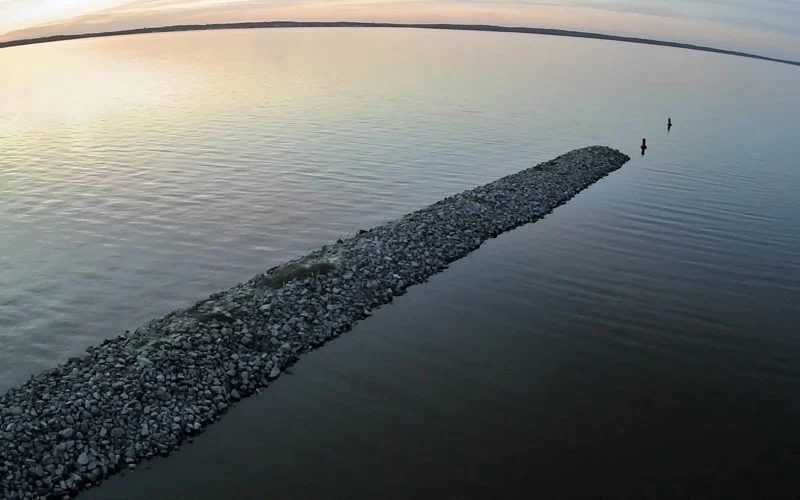
Properties along the water or near creeks and drainage channels rely on retaining walls even more. Where land meets the Reservoir or a canal, a retaining wall can slow erosion that would otherwise eat away at the property line. In some situations, these walls work alongside riprap, plantings, or drainage systems as part of a layered approach to controlling shifting soil. According to the Mississippi State University Extension, erosion control is especially important for property owners near water, since soil loss can affect both property value and local water quality.
As fall arrives, the combination of milder weather and the aftermath of summer storms often highlights where a wall might need attention. Leaning sections or bulging timbers can indicate that roots, water pressure, or the passage of time are putting stress on the structure. Some homeowners address the issue by adding drainage—such as gravel backfill or weep holes—to relieve pressure behind the wall and help it last longer. Others use this season to repair or rebuild sections that have started to fail. For many yards around the Reservoir, these projects are as much a part of routine maintenance as cleaning gutters or reseeding grass, even though the results tend to fade into the background once finished.
Retaining walls also influence landscape decisions. Their presence can determine where garden beds are planted, how walkways are laid out, and which trees can establish roots on a slope. Well-placed walls can make steep lots more usable, turning what would have been a difficult incline into a series of level spaces for gardens, seating, or play areas. In some newer neighborhoods, retaining walls are chosen to complement a home’s exterior or blend with existing stonework. In older areas, a patchwork of materials often tells the story of practical improvements made over time.
For anyone considering yard work this fall, taking a walk around the property and noticing retaining walls—whether old or new—can reveal where attention is needed. While wall upkeep may not be as noticeable as a fresh flower bed or a neatly trimmed hedge, it supports much of what makes Reservoir yards safe and usable. The work of these walls may be quiet, but it remains an important part of our local landscape.