
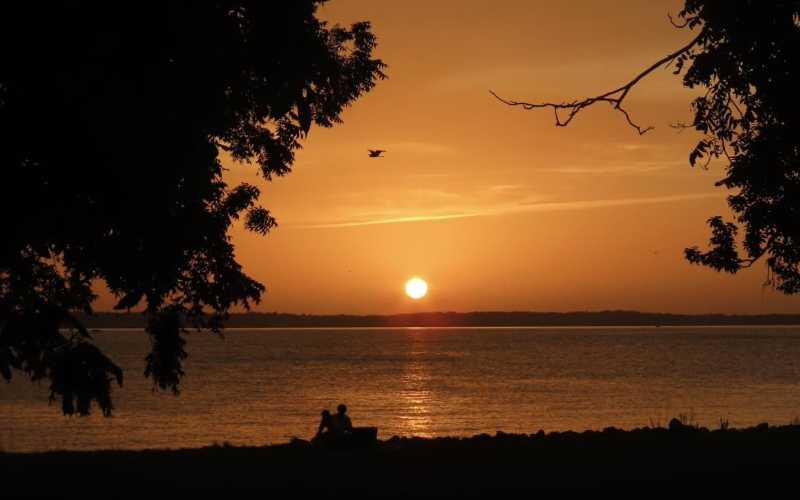
We talk about Reservoir sunsets as if they simply happen to us. In practice, somebody has to find the folding chairs, fill the water bottles, locate the bug spray and decide where the car can legally remain after the light changes. Without a little planning, the best ten minutes arrive while half the group is still unloading. A sunset should feel unhurried. The work belongs earlier in the afternoon.
Choose the place before late day. Use a public area whose posted hours cover the visit, or enjoy the view from home or a friend’s property with permission. Think about where the sun actually falls from that shoreline rather than assuming every part of the Reservoir faces the same evening. Check the weather and wind. A spot that is perfect on a still October day may be exposed and uncomfortable after a summer storm.
Come for the Hour Before
The most interesting light often begins before the sun reaches the trees. Arriving early gives children time to move, adults time to settle and everybody time to stop treating the evening like an appointment. Clouds pick up color, boat traffic changes direction and the far shore begins to flatten into one dark line. If the only goal is the final photograph, we miss most of what the water is doing. The hour before is the real event.
Bring only what helps people stay comfortable: chairs or a blanket, drinking water, insect protection and perhaps one extra layer in cooler months. A small light belongs in the bag for the walk back. Keep food simple and secured, because evening wind has the same interest in napkins as lunchtime wind. If children or pets are present, set clear boundaries before the light begins fading. Dark water does not become safer because it is beautiful.
Let the Reservoir Supply the Sound
There is no need to carry a speaker. The Rez has evening sounds we often cover up: lines tapping against masts, an outboard running home, insects starting in the grass and geese settling somewhere we cannot quite see. Voices carry across water, so a quiet conversation is enough. Silence does not have to be formal. It can simply be the absence of one more device asking for attention.
Phones will come out, and that is fine. Take the picture, then look over the top of the screen. Cameras adjust color and brightness until a sunset becomes something nobody actually saw. The human eye keeps the better version: the breeze, the people beside us and the minute when the water changes from reflective to dark. No post needs to prove we were there.
Pay attention to the people sharing the public space. Do not block a path or occupy the entire rail for a photo session. Keep pets controlled and voices reasonable near neighboring homes. If another family has chosen a quiet corner, leave them one. Sunsets are common enough that nobody needs to win the view.
Leave Without Undoing the Evening
Once the sun is down, darkness builds quickly near the water. Pack deliberately rather than waiting until nobody can see the ground. Count people, gather trash and use the light you brought instead of balancing a phone between your teeth. Drivers should watch for walkers, cyclists and wildlife leaving at the same time. The road home deserves more attention than the photograph in the passenger’s hand.
A well-planned sunset is mostly an agreement to arrive early and ask little of the hour. The chairs are ready, the route back is clear and nobody is still searching the trunk when the sky changes. We sit, listen and let the Reservoir perform the one show that never needs promotion. Then we leave the shoreline as quiet and clean as we found it.