
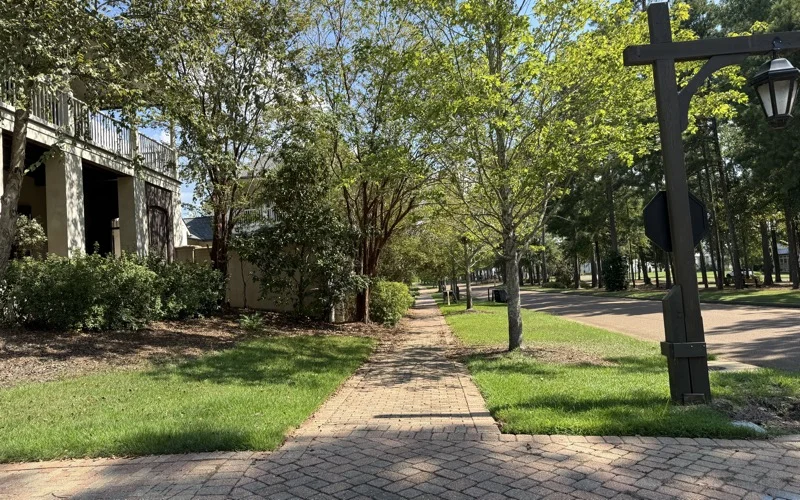
Lost Rabbit is easy to reduce to a drive-through impression. The road curves, rooftops and porches appear close together, the marina and Reservoir shape the view, and within a few minutes a visitor believes the neighborhood has been understood. Walking speed tells a different story. Shade changes block by block, dogs make their usual rounds and the small work of maintaining a house in Mississippi weather becomes visible. The place is not a backdrop; it is where people are living an ordinary day.
That distinction matters because attractive waterfront neighborhoods invite curiosity. People want to see the streets, photograph the water and understand how homes relate to the marina. There is nothing wrong with looking, but the visit should begin with respect for posted signs, legal parking and private property. A street that feels scenic is still somebody’s route home. A camera does not change where a yard or dock begins.
Go When the Day Is Gentle
Early morning and late afternoon make walking more comfortable through much of the year. Carry water, use sun protection and stay visible, especially where sidewalks, shoulders or sight lines change from section to section. Keep dogs leashed as required and clean up after them. Drivers should expect walkers near corners and parked vehicles. Everyone benefits from moving as though someone may appear around the next bend.
Without the windshield, details begin to connect. Porches face breezes and conversation, storage areas account for wet gear and shade becomes an architectural feature instead of a landscaping bonus. Doors, paths and outdoor rooms show how people move between house, street and water. Those choices are not simply picturesque. They solve the daily problems of heat, humidity, visitors and lake life.

The Reservoir Shapes the Work
Waterfront living is visible in maintenance as much as design. Outdoor surfaces deal with sun and damp air, metal needs attention and cushions require a dry place before weather changes. Dock equipment has to be checked, while yards carry the effects of wind and runoff. A polished view often represents ordinary work done repeatedly. The neighborhood looks cared for because people are caring for it.
The marina adds another rhythm. Boaters come and go, carts and gear move, and service activity overlaps with residents walking or driving home. Visitors should use only facilities available to them and follow current rules. Do not wander onto docks or into private amenities because the gate happened to be open. Waterfront access is valuable partly because boundaries keep it manageable.
Lost Rabbit also changes through the week. A quiet weekday morning, construction traffic through some areas throughout the day, a busier weekend afternoon and an evening when porch lights come on are different versions of the same few streets. A single pass cannot capture all of them. Residents know the pattern because they repeat it. Visitors can at least avoid interrupting it.
Let the Neighborhood Remain a Neighborhood
Do not block traffic or workers for photographs, idle beside a private home or turn residents into part of a sightseeing route. Keep voices reasonable and leave public spaces cleaner than you found them. If you need information, use official or publicly available sources rather than asking a person in their yard to explain the development. Courtesy is not complicated. It mostly requires remembering that the attractive place in front of us is home to somebody else.
Lost Rabbit is best understood as a neighborhood first and a scenic destination second. Walking helps because it slows the view down enough to reveal porch conversations, practical design and the maintenance behind the postcard. See what is public, respect what is not and notice the details that never fit through a windshield. That is a neighborly pace for any Reservoir community.