
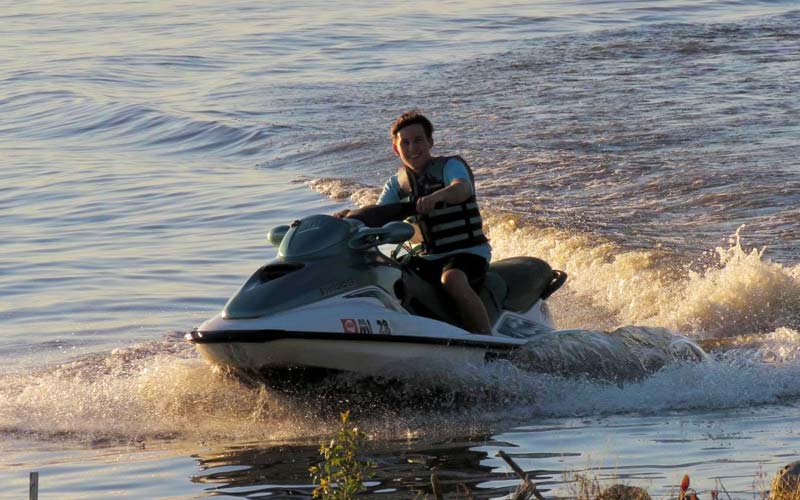
For children growing up near the Reservoir, water can feel as ordinary as the driveway. It is outside the back door, visible on the way to school and built into family plans long before the weekend arrives. That familiarity is one of the great gifts of living here. It is also why safety cannot be saved for boat days or explained only when the weather is warm. Respect for water has to become part of the household language.
Rules work best when they are clear, consistent and small enough to remember. Children should know which areas require an adult, when a properly fitted life jacket is required and what to do if a toy, pet or piece of gear goes into the water. The answer is never to follow it alone. Make boundaries physical where possible with gates, latches and supervised routes. “Be careful” is not a boundary.
Familiar Water Is Still Water
A dock a child has crossed a hundred times can be wet, damaged or different after a storm. Water level, wind, temperature and boat traffic change what looks like the same backyard. Teach children to stop and tell an adult when a board, ladder, line or gate looks wrong. Praise the report instead of dismissing it as worry. We want them to notice change before they learn to step over it.
Supervision needs a name. In a group of adults, everyone can assume someone else is watching, especially during unloading, cooking or conversation. Decide who has active responsibility and transfer it clearly. That adult stays close, attentive and free from distractions. A phone in hand and a general view of the yard is not the same thing.
Adults Demonstrate the Rule
Children notice whether grown-ups wear safety equipment, walk carefully on wet surfaces and change a plan when weather builds. A rule delivered loudly carries less weight than a calm habit repeated every time. Use current guidance from the U.S. Coast Guard’s boating-safety resources and MDWFP. Requirements can depend on age, activity and vessel, and equipment must fit the individual and be used as designed. “Do what I say” is a poor flotation device.
Make putting on a life jacket part of the normal sequence, not a debate held after the boat starts. Store jackets dry, visible and matched to the people who use them. Check straps, closures and condition according to the manufacturer’s instructions. Children grow, and last summer’s fit cannot be assumed. The right equipment should be ready before the exciting part begins.
Practice the boring parts. Show children where to wait while an adult secures the boat, how to keep fingers and feet clear, and why the dock gate closes behind them. Teach them to tell an adult when safety gear is missing or damaged. Go over how to call for help in age-appropriate language. Repetition makes the response available when excitement or fear makes thinking harder.
Build Confidence Without Pretending Risk Is Gone
Swimming lessons and water skills are important, but ability does not replace supervision or required safety equipment. Strong swimmers can be surprised by cold water, current, injury or distance. Children should understand that confidence belongs beside caution, not in place of it. Avoid frightening stories and false guarantees alike. Honest explanations help them make sense of the rules.
The goal is not to make a child afraid of the Reservoir. It is to make respect for water as ordinary as buckling a seat belt or looking before crossing a street. When adults demonstrate the habit, equipment is ready and boundaries remain consistent, children can enjoy the place without mistaking familiar water for harmless water. That balance—comfort with respect—is one of the most useful things a Reservoir family can teach.